Tuesday, July 10, 2018

The Presenteeism Problem: "It's My Allergies . . . Honestly!"


As we discuss HAI prevention, there are the "Big 6" HAIs (CLABSI, CAUTI, SSI, C. diff, MDROs, and VAP [although that one has been put on probation]) that get all the attention and resources.  However, other infections acquired in healthcare settings have less visibility but cause substantial harm.  One such HAI is healthcare-acquired respiratory viral infections (HARVI).  HARVI due to influenza has gotten increasing attention, especially in light of healthcare personnel (HCP) vaccination discussions (no worries, friends, I'm not stoking that debate again), but other viruses are increasingly recognized as causes of harm among our patients and colleagues (especially in light of better diagnostic tests).

In the current issue of ICHE, Len Mermel and Eric Chow provide an interesting perspective on one key aspect of HARVI transmission - HCP working while ill/symptomatic.  In their commentary, they argue that sick leave and work restriction policies that use fever as the parameter to keep HCP at home is too lenient, as infections due to many respiratory viruses may not cause fever but can still pose a substantial transmission risk.  They also call for a culture change surrounding presenteeism/working while ill, as too often the pressures to stay at work (limited sick leave especially with vacation days bundled into sick days in a single allocation, desire not to burden colleagues, importance of not handing over care to patients and maintaining the doctor-patient relationship) outweigh the push to stay home.  Policies, they appropriately argue, should be non-punitive with redundancy to allow coverage more readily.  Thanks to them both for raising some very important and provocative questions.

As I read their commentary, however, I kept going down various rabbit holes focused on implementation: 

  • How do you assess HCP with resp. symptoms for infection vs. non-infectious entities like allergies (there's no POC test to rule out allergic rhinitis)?  This would be a huge issue at my hospital, as we sit in the allergy belt of the country where spring leads to a chorus of runny noses.
  • What are the untended consequences of broader "stay at home" policies?  In units with highly-specific patient populations, you may run out of the experienced, skilled HCP and rely on coverage HCP, who may not be as comfortable or familiar with protocols, treatment regimens (e.g. a non-trauma nurse covering in the trauma unit).  Does that lead to unintended harm (arguably yes, if HCP shortages occur)?
  • What about the utility of masking those with respiratory symptoms and no fever (not mentioned in the paper)?  Does that reduce transmission as effectively?  As part of the broader culture change, should expectations for masking to improve acceptance be part of the conversation?

Finally, such discussions and debates highlight the need for more implementation guidance and research on HARVI prevention. Hey, SHEA, time for a new Compendium chapter?

Sunday, July 1, 2018

A semi-terrible, semi-no good, semi-very bad week in a semi-private room

A close family member became ill while traveling, and required emergent hospitalization. So I boarded a flight to provide support during what ended up being a weeklong hospitalization: the first two days at a small (~50 bed) local hospital, the rest at a large (>500 bed) tertiary care hospital. 

Overall, we were pleased with the care, and will likely rate the large hospital favorably (which I presume is common, given that this facility has a 5-star CMS rating). However, as others have pointed out, it would be very instructive for every health care worker to spend time each year as a patient or family member. Despite spending much of our professional lives in hospitals and seeking empathy with patients and their loved ones, nothing can replace being thrust into the patient/family role. So here are a few observations from the experience: 

There is nothing private about semi-private rooms. Multiple patient rooms are inimical not just to infection prevention, but also to privacy, confidentiality and basic human dignity. We learned much more than we ought to about the person in the neighboring bed, and vice versa. Add to that the additional interruptions, alarms (see below), and frequency with which HCWs moved from one bed to the other without performing hand hygiene, and I am more convinced than ever that single patient rooms should be the standard in all health care facilities. And “semi-private” should be replaced by “non-private” or “multi-patient” as a descriptor of hospital rooms.

Hospitals are aural assault zones. Most hospitals now have “quiet” or “hush” campaigns, laudable efforts to reduce noise. But noise from the hallways is a very small part of the problem. Seemingly everything in the hospital room makes noise! The IV pump (even when it isn’t alarming, in some cases), the NG suction, the various alarms (IV pump alarms, bed alarms), compression devices, intercom messages, code announcements… I’ve long had a pet peeve about IV pump alarms, but my concerns now encompass many additional noise sources—a long overdue solution is to re-route the pump alarm elsewhere (nurses’ station, pager), which also obviates the ridiculous step of requiring the patient (or family member) to press their call button to inform their caregiver that their IV pump is alarming. Engineering solutions to reduce noisy interruptions are essential.

Expecting patients to “speak up” and advocate for themselves is unrealistic. Acute care hospitalization is a traumatic experience, and once admitted the focus of the patient (and family) is simply on surviving the hospitalization and getting home. The default approach is often passive acceptance and deference to the treating caregiver. It’s not just that you don’t want to upset your doctors and nurses, but you also strongly want to believe that they are doing the right thing(s). We hesitated on more than one occasion when, in retrospect, it would have been better to speak up sooner, or more directly (on two occasions it might have prevented a complication). If even physicians are slow to point out problems or ask questions, how can we expect others to do so?

Finally, a kind word, a smile, and some ice chips can make a massive difference! Kindness may not be the only thing that matters (the right diagnosis and treatment is also kind of important), but it goes a long way.

Speaking of smiles, this sticker on our IV pump provided one during the first hospitalization, and helped explain why the pump was so noisy...it was Y2K non-compliant! A real confidence-booster!

Thursday, June 28, 2018

Dear Stewardship People: Can't We All Just Get Along?


The following post is by Dr. Jasmine Marcelin from University of Nebraska Medical Center.

Teams should work together, not compete

I am an Antimicrobial Stewardship Leader. As the Associate Medical Director of Antimicrobial Stewardship at my institution, I work with another physician (Antimicrobial Stewardship Medical Director) and an ID-trained Antimicrobial Stewardship PharmD. We have a great setup, share audit and feedback responsibilities, and have different interests clinically and for research, which makes it great to divide tasks for initiatives. I focus on outpatient ASP and SSI prophylaxis, PharmD on AU initiatives and cost, and other MD on CDI. We cover for each other, review and co-author each other’s grants, papers and presentations, and present education to various hospital groups together. We work well as a TEAM.

Teams are great things. Nothing meaningful can be accomplished when working alone and in silos. Some ASP teams also include nurses, infection preventionists, advanced practice providers and laboratory personnel, and the specific ASP leadership model will depend on the resources at an individual hospital. Each of these groups bring a very specific and unique skillset to the ASP team. Why is it then, that we seem to find ourselves in the midst of an MD-PharmD power struggle?

In February 2018, the IDSA, SHEA and PIDS released a statement that ID physicians should be leading the way in Antimicrobial Stewardship. This statement shared the unique skillset that ID doctors bring to the ASP table, including years of clinical training in the diagnosis and management of infections. This position paper reads as a statement of support from our societies demonstrating our value to hospital leadership. “Hey C-suite, we have these requirements for ASP, and it says you need a leader that has ID expertise. We literally went to school for ID, and we already work for you, so here are these reasons why you should actually PAY us for what we know how to do well, instead of asking us to do it for free while we are on hospital consults?” The position paper did not say, “ID physicians are better than Pharmacists at ASP”. In fact, the document went on to state, “An ASP should also include at least 1 pharmacist, ideally with subspecialty training in ID. While ID physicians and pharmacists may often have the most central roles in an ASP, all members of the ASP team, including microbiologists and infection preventionists, provide distinct skills of great value.”

Notwithstanding the explicit acknowledgement of the value of the team model of ASP, perhaps the conclusion “ID physicians are well equipped to lead multidisciplinary ASPs given their training, expertise, and experience” offended some of our pharmacist colleagues. The publication was followed by a letter to the editor in May 2018 that stated, “In identifying ID physicians as uniquely qualified for these functions, the paper fails to acknowledge the essential leadership and skill set of ID pharmacists in stewardship”. The letter then concludes, “Best care for patients is achieved through multi-disciplinary stewardship where pharmacist leaders are key to success”. This letter led to a flurry of social media posts misguidedly comparing the “value” of ASP physicians vs pharmacists. A real world study of ID fellow experiences with ASP shared that fellows looked to “pharmacists, not ID physician leaders as primary resources for antibiotic teaching”, and there was a social media frenzy that pharmacists should lead ASP, not ID physicians.

Seriously?

People, this is not a competition! Pharmacists are uniquely equipped to lead ASP because of their special training in the PK/PD of antibiotics, adverse drug effects, drug-drug interactions, and costs. ID physicians are uniquely equipped to lead ASP because of their special training in direct patient care, being boots on the ground as well as eyes in the sky, and can always use the “peer” card when approaching rogue prescribers. The thing is, we are BOTH essential for a successful ASP, and organizations should strive to fund BOTH, because we complement each other. The thing is, we ID physicians have had a long struggle for institutional acknowledgement and respect of our invaluable contribution to patient care. In our fight for recognition, perhaps we have failed to let our pharmacist colleagues know that we appreciate what they do, and that our work is enriched by their contributions. Perhaps we should be intentional to thank our pharmacists for this contribution so that they do not feel we are trying to usurp them and dismiss their value.

Physicians acknowledge and applaud pharmacists’ tireless contribution and value added to the ASP team. We support you in leadership roles. When we say we as physicians are suited to be ASP leaders, it is because we are. It does not diminish your role as co-leaders in a multidisciplinary team; neither does your teaching of antibiotics to ID fellows diminish our role as clinical experts to trainees. Can’t we all just get along? Time to put this superfluous competition to rest and support each other’s value, for the patients’ sake!

Saturday, June 16, 2018

Work Attire

I'm a creature of habit. My first activity every day is to read the New York Times. Depending on my schedule, some days I read more articles than others. This week I was away at a conference and found myself with some early morning extra time before the first meeting session, so I delved into the Arts section. I began to read the first article: Women of the Philharmonic Can Play It All. Just Not in Pants. It begins:
Women can wear pants at the Oscars, the Tony Awards and state dinners. They can wear pants while graduating from the Naval Academy, figure skating at the Olympics and running for president. They can wear them at just about any workplace in America.
But when the women of the New York Philharmonic walked on stage at David Geffen Hall recently to play Mozart and Tchaikovsky, they all wore floor-length black skirts or gowns. And they’re required to: The Philharmonic, alone among the nation’s 20 largest orchestras, does not allow women to wear pants for formal evening concerts.
The article goes on to discuss some of the unique problems that this dress code presents for musicians, such as the difficulties encountered when playing large stringed instruments, and one woman who plays the English horn recounted how the folds of her long dress got caught in the keys of her instrument during a critical passage.

I found the article interesting, but as an outsider to the music world simply thought that it's another example of how the frivolous often eclipses the big issues in life. Then I came to this quote from a female violinist, “One thing is really clear: People in the orchestra want to remain dressy. It’s important that we look like we care. That is sending a message. We put so much into the preparation of our programs that, yes, we need to look good as well.” At this point the light bulb turned on and all of the dots connected for me: here is the musical equivalent of the judgmental doctors who think that all doctors must wear white coats. And then I knew that the pathologic manifestations of professionalism are not limited to medicine.

Well at least in medicine our clothing police aren't sexist, I thought. But then I remembered that it was only three years ago that Mayo Clinic dropped its pantyhose requirement for women physicians. And in a recent essay, Roshini Pinto-Powell, the Associate Dean of Student Affairs at the Geisel School of Medicine at Dartmouth, writes about how professionalism forces nearly every woman interviewing for medical school or residency to follow rigid rules of dress that makes her look like a penguin. Maybe we aren't ahead of the New York Philharmonic after all.

You might think that in medicine we've overcome ageism and classism in our sartorial expectations. However, it's worth pointing out that the Department of Medicine at Johns Hopkins is just now dropping the requirement of short white coats for interns. In the video attached to this article about that in the Baltimore Sun, the Internal Medicine Chief Residents express their sorrow at the loss of the short coat. Really? In 2018? Yet almost everywhere medical students are still relegated to the short coat. How about we just get rid of them all given that hierarchy with its associated authority gradient in medicine makes it much less likely that a short-coated person will speak up when she sees a long-coated person about to make an error?

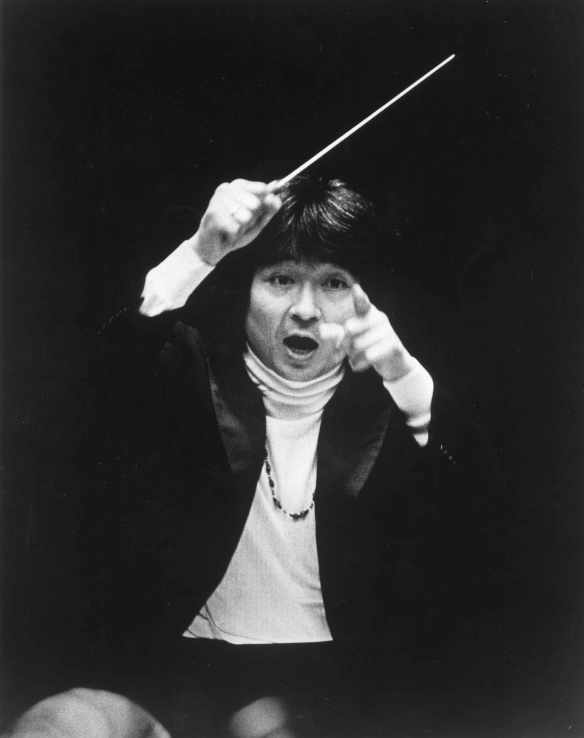
On a happy note, there are always positive deviants, and I want to point out two of them. In the musical world, there is Seiji Ozawa, who was the conductor of the Boston Symphony for three decades. Instead of wearing the customary white tie and tails, he boldly wore a white turtleneck and tails, a look that became his trademark. The other is Jorge Mario Bergolio. As he was about to step out onto the balcony in St. Peter's Square to be introduced to the world as Francis, he was handed the mozzetta, a short red velvet cape trimmed in ermine worn only by the pope. He declined this heirarchical symbol despite the professionalistic expectations of his peers in the College of Cardinals.

I remain convinced that we need to assess work attire using simple humanistic criteria. Your clothes should be clean, comfortable, functional, and safe. No need for white coats. No long gowns. No mozzetta. No penguin suits. And the only people that will care are those who remain blinded by professionalism.


Monday, June 4, 2018

Pushing the Needle on Influenza Vaccination


Despite continued debates about the use of influenza vaccination mandates in healthcare settings (see prior discussions just on this blog here, here, here, here, and here), facilities continue to move toward implementing some form of ‘mandatory’ program to ensure sustained high levels of influenza vaccination coverage among their staff.  A new article published in JAMA Network Open documents this increase with an update to a multi-year survey project asking about facility infection prevention practices.  I use the word ‘mandatory’ in quotes above on purpose because, as I detailed in an accompanying editorial, the definition of a mandate, when it comes to vaccination policy, is not standardized.


“…Most importantly, it does not appear that mandate was defined. Among respondents who reported having a vaccination mandate, only 74% reported having penalties for noncompliance and 13% allowed declination without a specified reason. Of those reporting no mandate, 21% reported penalties for noncompliance with hospital policy on influenza vaccination and 41% reported requirements for wearing masks if unvaccinated. An article in a bioethics journal5 offers the following criteria for using the term mandate in this setting: limiting acceptable reasons for refusal, penalizing nonparticipation, and enforcing these expectations. By these criteria, it is not clear how many programs described in this survey should appropriately be referred to as mandatory—the number may be higher or lower than that reported, although an increase over time seems likely.

The authors of the survey article also note that the VA is moving to a mandatory vaccine or mask policy this year, which will again increase the number of facilities using some type of mandate.  Hopefully, the VHA will take advantage of their more comprehensive healthcare delivery system to evaluate the impact of the program on both inpatient AND outpatient influenza among their patients, something that has been a persistent gap in prior reports.

ALSO, did you appreciate how easy it was to click the link and access the whole article?  Note that the article and the accompanying editorial are in JAMA Network Open, a new, fully open access journal “in which all content is made freely available to all readers immediately on publication. ….[they] will publish online only, every Friday.” Read more here.

Thursday, May 31, 2018

How I chose my doctor

Four years ago after moving back to Iowa City, I needed to find a new primary care doctor. I went to the University’s website and scanned the list of general internists. There I noted a physician that I had known when she was a medical student during my prior stint at the University of Iowa twenty years earlier. She had been an amazing medical student--very bright, hardworking, conscientious, and intellectually curious. My guess was that she now was an amazing internist. I asked a few colleagues about her and the responses were consistent: a superb clinician, an internist’s internist. Exactly what I was looking for.

I scheduled a new patient visit with Dr. B. Was I ever impressed! No stone was left unturned. She didn’t treat me like a doctor (for non-medical readers, that's a good thing). She took a complete history, including asking me if I ever used IV drugs. She took a sexual history. She then performed a complete exam, including genital and rectal exams. I note this as sometimes doctors skip these parts of the H&P given the somewhat awkward situation when they know the patient (another doctor) personally. At the end of the visit, I recall telling her that the encounter should have been videotaped for use as an exemplar for students and residents. When I arrived back to my office, I sent a note to the Chair of Internal Medicine to apprise him of her superb care. He wrote me back: “Yes, Dr. B is the crown jewel of the Department of Internal Medicine.”

Now let’s leave my story for a minute and examine a new study in the BMJ from the University of Michigan on patient preference for physician attire. This is a survey of a convenience sample of 4,000 patients at 10 US academic medical centers. It included both inpatients and outpatients, and used the design of many previous studies, showing patients the same doctor dressed seven different ways (scrubs, formal with white coat, etc.). After viewing the photographs, patients were questioned as to their preference of physician based on attire, as well as asked to rate the physician in the areas of knowledge, trust, care, approachability, and comfort.

The survey is well-designed and well-executed. I’ll let you review the paper if you want to know the results, since I don’t think the results have much validity, don’t merit much discussion, and I’ve blogged about these types of studies, previously (here, here, here, and here). I’m much more interested in why such studies are conducted, the biases they may represent, whether the researchers have an underlying agenda, the utility of the results, and how these studies are pathologic manifestations of professionalism.

Back to my story. Never once, before, during or after my clinic visit with Dr B, did I for a millisecond think about how she would be or was dressed. Granted, I’m not the typical patient as I have insider knowledge regarding doctors that the average patient does not. Even still, all patients want an authentically kind, compassionate, competent doctor who listens intently, and makes access to them easy. While they may have a preference for physician attire, when placed in context (as shown in a previous study), appearance is the least important patient satisfier. When appearance is further studied, attire is the least important characteristic, with hygiene and grooming taking precedence.

To ask patients to infer characteristics such as knowledge and trust on the basis of clothing is ludicrous on its face, and an insult to the study participants. "I chose the doctor with the beautiful tie," said no patient ever. I dislike this study for the same reasons that I dislike the tactics of Disney service excellence and Press-Ganey patient satisfaction initiatives. The common theme is that you can and should manipulate patients' perceptions without changing reality. Per the Michigan study, a white coat makes the doctor look more caring, but all of us know that a jerk in a white coat is still a jerk. If the doctor sits down while talking to a patient, the patient will perceive that they stayed in their room longer. How about sitting down because it makes the patient more comfortable?

The authors argue for patient-centered care and that “attire may be an important, modifiable component of patient care.” How does this study help us to provide patient-centered care since no matter how the data were sliced there was always a sizable fraction (often nearly half) of patients that didn’t agree with the majority opinion? Does this mean we should ask each patient which of the seven attire modes they would prefer before entering the exam room?

Lastly, I don’t think this study is really about what patients think of how doctors dress. Underneath it all, it’s a study about what some doctors think about how other doctors dress. And this is the ugly side of professionalism. Imagine a study where physicians are surveyed on the attire of nurses or carpenters. I think most people would find that creepy. Don’t most of us think that judging people on the basis of how they dress is superficial and somewhat creepy? And the test of whether this is about professionalism is to remove the occupational label in the survey. If patients were told to assess the attire of other people (not doctors) what would be the study implications? If we look at attire through the lens of humanism rather than professionalism, then what matters is simply that your work clothes are clean, comfortable, functional, and safe.

My advice to the Michigan doctors is this: take good care of your patients and they will love you, white coats and all.

OSHA! OSHA! OSHA!

  In many parts of the country, as rates of COVID-19 are declining and vaccination coverage is increasing (albeit with substantial variati...