Last but not least in the May issue of ICHE, Gonzalo Bearman and our very own Mike Edmond from VCU in Richmond, completed a nice quasi-experimental study looking at the benefits of universal gloving for all patient contact vs. standard contact precautions in their 18-bed surgical ICU. In phase 1 from September '07 to March '08, only standard contact precautions based on passive (clinical culture-directed) surveillance were used while in phase 2 from March '08 to Sept '08 universal gloving with emollient-impregnated gloves was used without contact precautions. During both phases, admission and every 4 day surveillance cultures were performed for MRSA and VRE but for study purposes only and not shared with the clinical teams.
So what happened? Only good things. Universal gloving compliance was 78% in phase 2 and was associated with higher hand hygiene compliance on entry (5% higher) and exit (12% higher). It also appears that universal gloving was associated with reduced CLABSI and catheter-UTIs, but with p-values = 0.1 for both outcomes. C. difficile was also lower (2.0/1,000 patient-days down to 1.4/1,000) but this finding was not statistically significant, p=0.53. VAP rates were the same (1.0 vs 1.1/1000 device days) The most important finding, in my opinion, was that HCW were less likely to have MRSA and VRE contaminating their hands during the universal glove phase. Despite what the authors state (Mike don't be mad!), the study was not likely powered sufficiently to find reduced acquisition, given that MRSA acquisition was reduced by 50% with universal glove (2.9/1000 patient-days vs. 1.4/1000 patient days) but this had a p=0.2.
I think overall, that these findings suggest that universal gloving shows promise warranting further study. I wonder if they stopped universal gloving after the study period? If they did, this would make for a very epidemiologically sound quasi-study (roll-in and roll-out) which could be analyzed using more powerful segmented Poisson regression,which can detect a change in slope and intercept associated with starting or stopping the intervention.
The June ICHE just appeared online 5 minutes ago...more exciting evidence for us to review!
Friday, April 30, 2010

Thursday, April 29, 2010
Rhinoceroses and Total Hip Arthroplasty
Distinctions are very important. I was just visiting Ohio last week and had the chance to visit the Columbus Zoo. It's a pretty cool place if you like zoos. I enjoyed reading about various animals and learned that the Black Rhino is endangered, while the White Rhino is not. Thus, it would make sense to spend your conservation money, if you have some, on Black Rhinos first, since time is running out. In infection control, we ought to do the same thing, but in reverse; spending our limited resources on preventing more common infections first. Also, with the rise of public reporting and other methods of interhospital comparison, efforts must be made to place hospitals on a level playing field. There is a nice study that highlights these two issues in the May ICHE by Surbhi Leekha and colleagues at the Mayo Clinic in Rochester, MN.
They examined at a 5-year cohort (2002-2006) of all total hip arthroplasties (primary and revision) and looked to see who developed SSI, using CDC definitions. After controlling for age, gender and NNIS index, patients who had a revision total hip arthroplasty had twice the odds of SSI compared to primary surgery (OR=2.2, 95% CI 1.3-3.7). The difference was even more stark when outcomes were restricted to deep or organ space SSI with revisional surgery associated with four times the odds of SSI (OR 3.9, 95% CI, 2-7.9). One note, they didn't appear to control for duration of surgery as a confounder, even though it was associated with both revisions and SSI. I think this is correct. They were not completing a risk-factor study, but were interested in outcomes.
The usual caveats apply to these types of studies including a single center study and a relatively unique single center at that. However, this is an important study and if these findings hold up at other institutions, which they most certainly will, this suggests that the case-mix of revision and primary hip arthroplasty must be taken into account when SSI rates are reported and hospitals compared. Perhaps an easier solution, as the authors suggest, is to treat them as two different animals, if you will, and report them separately. Also, if one wanted to target specific infections or high-risk procedures, these results suggest targeting revision surgeries over primary ones.
Note: Surbhi is joining the group at my old Maryland stomping grounds and I know everyone is excited for her to arrive.
They examined at a 5-year cohort (2002-2006) of all total hip arthroplasties (primary and revision) and looked to see who developed SSI, using CDC definitions. After controlling for age, gender and NNIS index, patients who had a revision total hip arthroplasty had twice the odds of SSI compared to primary surgery (OR=2.2, 95% CI 1.3-3.7). The difference was even more stark when outcomes were restricted to deep or organ space SSI with revisional surgery associated with four times the odds of SSI (OR 3.9, 95% CI, 2-7.9). One note, they didn't appear to control for duration of surgery as a confounder, even though it was associated with both revisions and SSI. I think this is correct. They were not completing a risk-factor study, but were interested in outcomes.
The usual caveats apply to these types of studies including a single center study and a relatively unique single center at that. However, this is an important study and if these findings hold up at other institutions, which they most certainly will, this suggests that the case-mix of revision and primary hip arthroplasty must be taken into account when SSI rates are reported and hospitals compared. Perhaps an easier solution, as the authors suggest, is to treat them as two different animals, if you will, and report them separately. Also, if one wanted to target specific infections or high-risk procedures, these results suggest targeting revision surgeries over primary ones.
Note: Surbhi is joining the group at my old Maryland stomping grounds and I know everyone is excited for her to arrive.
Wednesday, April 28, 2010
Oxymoron of the Day
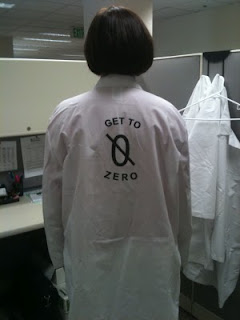 A new white coat design greeted me this morning when I arrived at the office. One that I'm sure Mike will call me about immediately to order for his hospital! We all know how much he loves white coats. (that's a joke if you are new around here)
I've already stated previously, that I don't know what a metaphor is, so it won't be a surprise to you that I'm not sure if this coat qualifies as a true oxymoron, a physical oxymoron or is just ironic. I do think it sums up my feelings towards infection prevention these days. We are driven by the desire for zero infections, which while good in theory, can have unintended negative consequences. This white coat is a perfect example: Good for education (although I suspect that is debatable) and bad for spreading pathogenic bacteria (MSSA, MRSA, Acinetobacter) from patient to patient.
Anyway, Dan's post below is more interesting, so please move along.
Tuesday, April 27, 2010
Does PowerPoint make us stupid? I have 4 bullet points on that….
There have been several critiques of PowerPoint over the years (one of my favorites, here, is a PPT summary of the Gettysburg Address). But the program remains among the most commonly used tools for disseminating information in health and medicine.
An interesting piece in today's NY Times discusses the military’s increasing use of PowerPoint, and the accompanying backlash. A good summary quote, here:
“[PowerPoint is] dangerous because it can create the illusion of understanding and the illusion of control,” General McMaster said…..“Some problems in the world are not bullet-izable.”
I agree that using PowerPoint can be detrimental when the objective of an interaction is to spur action or implementation….as it tends to convert the audience to passive recipients of neatly packaged information, rather than active participants and problem solvers. For example, if you are presenting plans for bloodstream infection prevention to your ICU staff, one of your slides might contain bullet points recommending “culture change” and “administrative engagement”. What does that mean?
On the other hand, if your purpose is to escort your audience into the 9th circle of “PowerPoint hell”, then go for it!
"Senior officers say the program does come in handy when the goal is not imparting information......news media sessions often last 25 minutes, with 5 minutes left at the end for questions from anyone still awake. Those types of PowerPoint presentations, Dr. Hammes said, are known as “hypnotizing chickens.”
Monday, April 26, 2010
NHSN Definitions for CLABSI: Preventing the Unpreventable?
There is a nice Concise Communication in the May issue of ICHE out of the University of Michigan (Go Blue). The investigators were interested in the specificity of NHSN CLABSI definitions in their Critical Care Medicine Unit (CCMU) and their SICU during the period after implementation of CLABSI bundles. They excluded from review BSIs that were determined to be central line-related BSIs (CLRBSI) since they required positive cath-tip cultures or differential time to positivity. They then had all CLABSIs, as determined by unit-designated infection preventionists using NHSN definitions, reviewed further by two non-blinded ID physicians.
To cut to the chase, since this post shouldn't be longer than the original concise communication, there were 30 non-secondary BSIs in the CCMU, 10 were CLRBSI and 20 were CLABSI. Of the 20 CLABSI, 9 (45%) were considered to have central line sources, 9 were considered contaminated blood cultures and 2 were considered transient post-op BSIs. Of the 8 non-secondary BSIs in the SICU, there were no CLRBSI and 5 (63%) were intra-abdominal sources and 1 unknown non central-line source leaving 2 confirmed CLABSI. Thus, of the original 38 IP-reported CLABSIs in the two ICUs, ID physicians confirmed 21, leaving them with an positive predictive value of 55%; close to flipping a coin.
Now, I didn't read the discussion section of the paper (who has the time!), however, since they only looked at IP determined CLABSIs they can't report sensitivity or specificity; in fact they didn't calculate the PPV, I did that. Given that so many CLABSIs appeared to be contaminated blood cultures, efforts could now be directed to preventing those, but the clinical benefit to the patient would likely be small apart from a few avoiding unnecessary antibiotic exposure. Efforts spent limiting those non-BSI CLABSIs, I suspect will be undertaken since we all have to get to zero. It's just sad that those efforts won't help our patients.
To cut to the chase, since this post shouldn't be longer than the original concise communication, there were 30 non-secondary BSIs in the CCMU, 10 were CLRBSI and 20 were CLABSI. Of the 20 CLABSI, 9 (45%) were considered to have central line sources, 9 were considered contaminated blood cultures and 2 were considered transient post-op BSIs. Of the 8 non-secondary BSIs in the SICU, there were no CLRBSI and 5 (63%) were intra-abdominal sources and 1 unknown non central-line source leaving 2 confirmed CLABSI. Thus, of the original 38 IP-reported CLABSIs in the two ICUs, ID physicians confirmed 21, leaving them with an positive predictive value of 55%; close to flipping a coin.
Now, I didn't read the discussion section of the paper (who has the time!), however, since they only looked at IP determined CLABSIs they can't report sensitivity or specificity; in fact they didn't calculate the PPV, I did that. Given that so many CLABSIs appeared to be contaminated blood cultures, efforts could now be directed to preventing those, but the clinical benefit to the patient would likely be small apart from a few avoiding unnecessary antibiotic exposure. Efforts spent limiting those non-BSI CLABSIs, I suspect will be undertaken since we all have to get to zero. It's just sad that those efforts won't help our patients.
Friday, April 23, 2010
How many chickens for a 7-day linezolid course?
Like many, I’m intrigued by the health care reform proposal recently put forward by a Nevada Senate candidate. The proposal calls for a return to the barter system for health care delivery. There are only a few problems. One recent analysis concluded that basing such a system solely on chickens would be impossible, given the sheer number of chickens required.
Another shortcoming--what to do about adverse events and nosocomial infections? Shouldn’t a patient also receive goods or services if he or she is harmed during the delivery of health care? I can see it now…returning home after a hospital stay complicated by a nosocomial infection, you discover that the hospital has sent someone over to paint your house…
Another shortcoming--what to do about adverse events and nosocomial infections? Shouldn’t a patient also receive goods or services if he or she is harmed during the delivery of health care? I can see it now…returning home after a hospital stay complicated by a nosocomial infection, you discover that the hospital has sent someone over to paint your house…
Wednesday, April 21, 2010
Tracheotomy, VAP, p-values and death
There is a new RCT just published in JAMA by a large group in Italy looking at the benefits of early (day 6-8) vs late (day 13-15) tracheotomy completed in 12 ICUs. The primary endpoint was VAP. There is also a very nice accompanying editorial. There are several interesting findings. First, patients randomized to early tracheotomy were less likely to develop VAP by day 28, 14% vs 21%, but the p-value was 0.07. Since the p value was greater than 0.05, the authors were forced to say that there was no benefit from early tracheotomy.
Interestingly they also found significantly greater vent-free days, ICU-free days, successful weaning and ICU discharges in the early tracheotomy group. There was even a trend towards higher survival in the early vs late group, HR=0.80, 95% CI 0.56-1.15. The authors and editorial do a nice job of pointing out that 31% of early and 43% of the late group didn't even receive a tracheotomy due to impending extubation or death. The editorial even makes the point that selecting an early tracheotomy is really a strategy of more trachs. The study did not assess patient comfort, which may be associated with early tracheotomy.
What is always troubling to me is that scientists, editorialists, journals and clinicians are stuck in this p-value trap. Here we have a study, a very good randomized trial, which shows likely clinically significant reductions in VAP and potentially lower mortality, but since the study was underpowered we are forced to say "no difference." I wonder if you calculated how many patients are intubated each year in the US (or Italy) and reduced VAP rates by 33%, how many VAPs would be prevented and how many deaths would be prevented? I know this study should be repeated, but will it? You have a negative JAMA study, what's the incentive? I describe this phenomenon as "Death by p-value."
Interestingly they also found significantly greater vent-free days, ICU-free days, successful weaning and ICU discharges in the early tracheotomy group. There was even a trend towards higher survival in the early vs late group, HR=0.80, 95% CI 0.56-1.15. The authors and editorial do a nice job of pointing out that 31% of early and 43% of the late group didn't even receive a tracheotomy due to impending extubation or death. The editorial even makes the point that selecting an early tracheotomy is really a strategy of more trachs. The study did not assess patient comfort, which may be associated with early tracheotomy.
What is always troubling to me is that scientists, editorialists, journals and clinicians are stuck in this p-value trap. Here we have a study, a very good randomized trial, which shows likely clinically significant reductions in VAP and potentially lower mortality, but since the study was underpowered we are forced to say "no difference." I wonder if you calculated how many patients are intubated each year in the US (or Italy) and reduced VAP rates by 33%, how many VAPs would be prevented and how many deaths would be prevented? I know this study should be repeated, but will it? You have a negative JAMA study, what's the incentive? I describe this phenomenon as "Death by p-value."
Tuesday, April 20, 2010
So just how evil is INH?
A recent issue of MMWR has a report of 17 cases of severe liver injury occurring in persons being treated with isoniazid (INH) for latent tuberculosis. Five of these patients required liver transplantation, and five died. Of note, all patients were monitored for toxicity in compliance with guidelines. These cases were detected via a passive surveillance system. I suspect that this is just the tip of the iceberg since as I have blogged before, I have personally seen 3 cases in the last few years (two died, one survived after liver transplantation). In addition, less than half of patients complete the 9-month recommended course of therapy. On the other hand, only a small percentage of those treated develop severe liver injury, since it is estimated that 300,000-400,000 are treated with the drug each year. Still, I continue to believe that this drug is simply too toxic to treat a latent infection which has on average only a 10% chance of converting to active disease. Certainly some patients are at much higher risk for developing active tuberculosis, but those patients are also often at higher risk of toxicity. For those clinicians who feel compelled to use it, I would recommend careful informed consent and monitoring of transaminases for all patients, not just those for whom testing is recommended by the ATS/CDC guideline.
America's Best Hospitals: Smoke & mirrors?
There's an interesting new study in the latest Annals of Internal Medicine, which critically analyzes U.S. News & World Report's famous ranking of hospitals. The overall ranking is derived from a composite score that includes objective measures, such as mortality rates and nurse staffing, as well as a single subjective measure, reputation, which is determined by a survey of 250 randomly selected physicians in each specialty. What the author of the paper found is that the top ranked hospitals achieve their lofty spots on the list almost exclusively on the basis of the reputation score. In fact, there was little relationship between the rankings and objective quality measures.
Program Alert: Food, Inc. on PBS Wed 4/21
Last year, Mike recommended the movie Food, Inc. I just received an email from Barb Kowalcyk, a friend and one of the stars of the documentary, announcing that it will be on your local PBS station this Wednesday, April 21. Barb and I worked together for years on the USDA Food Safety Inspection Service's National Advisory Committee on Microbiological Criteria for Foods (NACMCF). She is the co-founder of the non-profit, Center for Foodborne Illness Research & Prevention (CFI). Her story and her son Kevin's story are featured in the movie.
Monday, April 19, 2010
A New Conflict of Interest
David Rind, a primary care physician and blogger-extraordinaire, has written a nice post titled Rooting for Results describing the bias that can sneak into one's interpretation of a study's results if you have a pre-specified opinion of the study or are rooting for certain results. David said it best: "Conflicts of interest come in many shapes and sizes. But even without such conflicts influencing the interpretation of results, the desire to have been right in the past...causes important, and perhaps overriding, biases in experts as they confront and interpret new evidence." I think this is another type of bias influencing the MRSA ADI debate. Anyway, Dr. Rind does an excellent job of recognizing this bias in himself; something I hope I will be able to do the next time I read a paper where I have strong preexisting opinions.
Sunday, April 18, 2010
iPad as a metaphor for the future of infection prevention
I've been doing a lot of thinking lately. This is perhaps because I'm between jobs and have some occasional downtime but it's more likely the result of not actually owning a computer these past two weeks, unless you count my phone. What I've been thinking about is why I ended up in hospital epidemiology in the first place. I mean, who, in their right mind, would choose to go into a profession that is under appreciated, under funded and lacks the proper scientific data to make rational clinical decisions. I could go on, and I'd be happy to if you meet me at the local pub...
What keeps sticking in my head is how little we've advanced since Semmelweis described the benefits of hand disinfection. For one, we're still doing quasi-experimental studies, although Semmelweis's design was at least controlled (midwives). It also seems that most of our contentious debates, including those around active detection and isolation, would be unnecessary if we'd followed his advice and had 100% hand hygiene. As for recent advances, the CLABSI checklist popularized by Peter Pronovost is probably the most important. Why was this advance made by someone who wasn't an ID physician or hospital epidemiologist? I think it's because as a profession we're stuck. Perhaps more clinical trials will advance things, but I have this suspicion we'll just end up proving what we already know - where will the advancement come from?
So, what does this have to do with the iPad? I just came across this article by Daniel Eran Dilger on how Steve Jobs utilizes creative destruction to change the world. The article is a little tech heavy and perhaps Apple biased, but I don't think that detracts from it's main points which I believe have relevance for a potential 'new' future for infection prevention. Dilger's main points are: (1) "Jobs understands death as a creative force better than most people. For society, culture, and technology to progress, old thinking has to die off to make way for fresh new ideas. People who don’t die are dragged kicking and screaming in the future..." and more importantly (2) "When something works, you don’t need to kill it. But in some cases you should."
So what does this mean for infection prevention and what should be "killed off"? I don't know. It's only been two weeks! However, I think we need to discuss what old ideas we are unnecessarily holding on to and we shouldn't back away from killing off things that work. Yes this is easier said than done and is perhaps a useless exercise. I'm just one guy, I don't even own a computer and I'm not even sure I know what a metaphor is.
What keeps sticking in my head is how little we've advanced since Semmelweis described the benefits of hand disinfection. For one, we're still doing quasi-experimental studies, although Semmelweis's design was at least controlled (midwives). It also seems that most of our contentious debates, including those around active detection and isolation, would be unnecessary if we'd followed his advice and had 100% hand hygiene. As for recent advances, the CLABSI checklist popularized by Peter Pronovost is probably the most important. Why was this advance made by someone who wasn't an ID physician or hospital epidemiologist? I think it's because as a profession we're stuck. Perhaps more clinical trials will advance things, but I have this suspicion we'll just end up proving what we already know - where will the advancement come from?
So, what does this have to do with the iPad? I just came across this article by Daniel Eran Dilger on how Steve Jobs utilizes creative destruction to change the world. The article is a little tech heavy and perhaps Apple biased, but I don't think that detracts from it's main points which I believe have relevance for a potential 'new' future for infection prevention. Dilger's main points are: (1) "Jobs understands death as a creative force better than most people. For society, culture, and technology to progress, old thinking has to die off to make way for fresh new ideas. People who don’t die are dragged kicking and screaming in the future..." and more importantly (2) "When something works, you don’t need to kill it. But in some cases you should."
So what does this mean for infection prevention and what should be "killed off"? I don't know. It's only been two weeks! However, I think we need to discuss what old ideas we are unnecessarily holding on to and we shouldn't back away from killing off things that work. Yes this is easier said than done and is perhaps a useless exercise. I'm just one guy, I don't even own a computer and I'm not even sure I know what a metaphor is.
Friday, April 16, 2010
NPR's Science Friday on Antibiotic Resistance!!
On today's Science Friday Ira Flatow welcomed Dr. Stuart Levy from Tufts, Maryn McKenna the author of Superbug, Brad Spellberg from Harbor-UCLA and Elizabeth 'Betsy' McCaughey (Former Lt. Governor, New York and Death Panels - page 432). Stuart Levy is well known for his many years of work studying resistant organisms and developing new antimicrobials and Brad Spellberg is very well spoken. Brad's description of the debate around MRSA screening was fantastic and his explanation of the difficult issues surrounding new drug discovery (economic and FDA) was great. His call for actual research funding to figure out how to do terminal cleaning and figure out optimal prevention strategies was spot on.
Maryn McKenna, unfortunately, didn't get many words in but her comments around antibiotic stewardship in humans AND animals are very important. There is one point in the middle where Ira questions Ms. McCaughey's conflicts of interest around cleaning agents, listen for that. Near the end Ira brings up triclosan use in household products and Stuart Levy, having done much of the research on the harms associated with triclosan's use, offers a great description of why we should avoid it. Ira summarizing the discussion said that "we are going to devolve into the 18th century" where we won't have any effective antibiotics and "to me it sounds like you're just rearranging the chairs on the Titanic." Enjoy!
Direct audio link (here)
Website (here) with speaker info and audio link on the upper left side of the page
Maryn McKenna, unfortunately, didn't get many words in but her comments around antibiotic stewardship in humans AND animals are very important. There is one point in the middle where Ira questions Ms. McCaughey's conflicts of interest around cleaning agents, listen for that. Near the end Ira brings up triclosan use in household products and Stuart Levy, having done much of the research on the harms associated with triclosan's use, offers a great description of why we should avoid it. Ira summarizing the discussion said that "we are going to devolve into the 18th century" where we won't have any effective antibiotics and "to me it sounds like you're just rearranging the chairs on the Titanic." Enjoy!
Direct audio link (here)
Website (here) with speaker info and audio link on the upper left side of the page
This healthcare quality report is excellent....for us to poop on!
So SHEA, APIC and IDSA have released a joint statement that echoes (and expands upon) Mike's concerns about the recent, highly publicized AHRQ report. The statement and accompanying set of talking points speak for themselves. I will quote one small section, and let you read the rest.
"We are concerned that any report coming from a government agency based solely on the use of administrative data, commonly referred to as billing/coding data, paints an inaccurate picture of healthcare-associated infections for the public. In contrast, another Department of Health and Human Services agency -- the Centers for Disease Control and Prevention (CDC) – is preparing to release epidemiologically sound, surveillance data based on the National Healthcare Safety Network (NHSN). Multiple studies have concluded that administrative coding data appears to be a poor tool for accurately identifying infections. This may create greater confusion among consumers."
Tuesday, April 13, 2010
2009 AHRQ National Healthcare Quality Report: Getting Worse(r)
AHRQ just published the "2009 National Healthcare Quality Report and National Healthcare Disparities Report" and things don't look too good. Full reports available here. Post-op sepsis or BSI---increased 8%. Post-op catheter-associated UTI---increased 3.6%. And for CLABSI - drum roll----no change. Ouch! Post-op pneumonia down 12%. The New York Times seemed upbeat, calling the problem of these infections "largely solvable."
I'm not sure where these data leave us and perhaps Mike, Dan and Connie will have some comments on this report too. However, I think what these data are telling us is that when you don't fund enough proper studies (and multiple studies) on methods to prevent HAIs - the 6th leading cause of death and when you are mostly left to resort to "absence of evidence-based medicine" tricks like kitchen-sink bundles...well, this is where you end up.
To suggest, as Katherine Sebelius did, that the new health care law would “help turn these numbers around” since hospitals with high rates of infections will be penalized starting in the 2015, is a bit hopeful. I think we haven't invested in HAI prevention studies like we have in cardiology and other areas, and I don't think we're going to get these rates down with sticks alone. You can't see in the dark if you don't know how to make a flashlight or even light a fire.
I'm not sure where these data leave us and perhaps Mike, Dan and Connie will have some comments on this report too. However, I think what these data are telling us is that when you don't fund enough proper studies (and multiple studies) on methods to prevent HAIs - the 6th leading cause of death and when you are mostly left to resort to "absence of evidence-based medicine" tricks like kitchen-sink bundles...well, this is where you end up.
To suggest, as Katherine Sebelius did, that the new health care law would “help turn these numbers around” since hospitals with high rates of infections will be penalized starting in the 2015, is a bit hopeful. I think we haven't invested in HAI prevention studies like we have in cardiology and other areas, and I don't think we're going to get these rates down with sticks alone. You can't see in the dark if you don't know how to make a flashlight or even light a fire.
Healthcare worker vaccination programs: what works?
There is a new study out in ICHE by Tom Talbot and colleagues that looked at which factors of an influenza vaccination program were associated with a higher proportion of healthcare workers being vaccinated for seasonal influenza. The survey was completed during June 2008 and looked at programs in place during the 2007-2008 influenza season at 50 hospitals within the 78-hospital University HeathSystem Consortium (UHC) Benchmarking Program. The proportion vaccinated was the same whether or not hospitals required a signed declination from refusers. Factors association with higher compliance were weekend provision of vaccine, train-the trainer programs, report of vaccination rates to administrators or to the board of trustees, a letter sent to employees emphasizing the importance of vaccination, and any form of visible leadership support. Sadly, the median compliance was 55% and ranged from 26% to 81%. Perhaps I should have titled my post, "what didn't work" because it's hard to say anything really worked with compliance this low.
H1N1: One year later
This morning's New York Times has an OpEd piece by Dick Wenzel in which he reflects on the H1N1 influenza pandemic over the past year. Click here to read it.
Monday, April 12, 2010
New twist in the infection control vs. religion battle

Photo: The Daily Mail
Sunday, April 11, 2010
Pig-Pen went to medical school
There's another paper just recently published on contamination of white coats. This study from Nigeria cultured the white coats of 103 doctors. Pathogens were cultured from nearly half (48%) of the coats. Staph. aureus was found on 19% of the coats, Pseudomonas aeruginosa on 10%, and other gram-negative organisms were found on 19%. The authors of the paper made a number of recommendations regarding the white coat, including frequency of laundering. Unfortunately, they left out the most important one--just get rid of them!
Saturday, April 10, 2010
FDA taking a closer look at Triclosan
Triclosan, one of the primary ingredients in consumer antibacterial soaps and many other products, was thought to be safe even if it might select for resistant bacteria. Recently, the FDA has updated its webpage to state that "animal studies have shown that triclosan alters hormone regulation" and "other studies in bacteria raised the possibility that triclosan contributes to making bacteria resistant to antibiotics." And on the other side of the cost-benefit equation, the FDA now states "the agency does not have evidence that triclosan in antibacterial soaps and body washes provides any benefit over washing with regular soap and water." If you're interested in reading more on the lack of benefit of antibacterial products in the consumer setting I suggest Elaine Larson's wonderful study in the Annals or even this randomized trial in the Lancet comparing regular soap to antibacterial soap in Pakistan.
Just to emphasize how important the question of triclosan's safety is, it has been shown to persist in coastal waters for up to 40 years. Thus, we have a chemical agent, that was thought to be a non-specific and safe biocide, but has now been found in almost 50% of consumer soaps, select for resistant bacteria, potentially have hormone effects, persist in the environment and have little benefit to the consumer. The FDA will report back to us in Spring 2011.
Just to emphasize how important the question of triclosan's safety is, it has been shown to persist in coastal waters for up to 40 years. Thus, we have a chemical agent, that was thought to be a non-specific and safe biocide, but has now been found in almost 50% of consumer soaps, select for resistant bacteria, potentially have hormone effects, persist in the environment and have little benefit to the consumer. The FDA will report back to us in Spring 2011.
Active surveillance for MRSA: The debate goes on
There are two new studies in the Journal of Hospital Infection, both from Europe, that add fuel to the MRSA active surveillance debate. The first examines national and local data in France prior to a 2009 recommendation from the French Society of Hospital Hygiene that MRSA screening be done in all ICUs for all patients with previous hospitalization, invasive devices, or previous antibiotic therapy. The authors point out that in a national point prevalence survey done in 2006, MRSA accounted for 6% of HAIs in ICUs, while Pseudomonas aeruginosa accounted for 15%. At their university hospital, the authors then analyzed one year of surveillance data from adult ICUs where active surveillance for MRSA and P. aeruginosa is performed on admission and then weekly. Colonization rates were 19% for P. aeruginosa vs. 4% for MRSA. P. aeruginosa accounted for 8% of infections, while MRSA accounted for 0.5%. Further analysis revealed that 50% of the patients who acquired P. aeruginosa after admission were the result of cross-transmission. Even if all MRSA was acquired via cross-transmission, Pseudomonas was 3 fold more likely to be transmitted than MRSA.
The second study is from an academic medical center in Ireland with an occupancy rate of 105% (i.e., 5% of admitted patients are boarders in the Emergency Department awaiting ward beds). The authors sought to determine whether patients identified as previously colonized or infected with MRSA wait longer for a hospital bed once the decision to admit from the ED has been made. Patients previously identified as colonized or infected are flagged in the hospital information system as is done in many hospitals. Patients were who flagged waited 2.5 hours longer for a hospital bed than those who were not. Thus, crowding in Emergency Departments is exacerbated by a MRSA active surveillance program.
Although much of the debate on MRSA active surveillance focuses on whether the intervention is effective in reducing transmission of MRSA in the inpatient setting, that is only one of the important issues. Other important questions are whether the intensity of resources required by active detection and isolation (ADI) are merited to control this organism when other important pathogens are more common, and the adverse unintended consequences of ADI, as pointed out by these studies.
The second study is from an academic medical center in Ireland with an occupancy rate of 105% (i.e., 5% of admitted patients are boarders in the Emergency Department awaiting ward beds). The authors sought to determine whether patients identified as previously colonized or infected with MRSA wait longer for a hospital bed once the decision to admit from the ED has been made. Patients previously identified as colonized or infected are flagged in the hospital information system as is done in many hospitals. Patients were who flagged waited 2.5 hours longer for a hospital bed than those who were not. Thus, crowding in Emergency Departments is exacerbated by a MRSA active surveillance program.
Although much of the debate on MRSA active surveillance focuses on whether the intervention is effective in reducing transmission of MRSA in the inpatient setting, that is only one of the important issues. Other important questions are whether the intensity of resources required by active detection and isolation (ADI) are merited to control this organism when other important pathogens are more common, and the adverse unintended consequences of ADI, as pointed out by these studies.
Thursday, April 8, 2010
NARSA Presentations
The presentations from the 11th annual meeting of the Network on Antimicrobial Resistance in Staphylococcus aureus (NARSA) are now online, including the pro-con session I did with Lance Peterson. My file includes the full text of my talk in the “Notes” section. So feel free to download and use as you see fit!
Also check out Catherine Liu’s presentation on the new MRSA treatment guideline that is currently “in progress”. She delivered a great talk, and the PPT file is informative and useful.
Note: to open any of the presentations, you’ll have to click “read only” in the annoying pop-up window.
Also check out Catherine Liu’s presentation on the new MRSA treatment guideline that is currently “in progress”. She delivered a great talk, and the PPT file is informative and useful.
Note: to open any of the presentations, you’ll have to click “read only” in the annoying pop-up window.
Welcome to Connie!
As our regular readers know, we’ve now survived our first year on the interwebs. In an effort to keep bringing you fresh perspectives on infection prevention, we have invited Dr. Connie Price to join us. We are pleased that she has accepted, and look forward to working with her. Many of you probably know Connie, Associate Professor of Infectious Diseases at the University of Colorado and hospital epidemiologist at Denver Health and Hospital. For those of you who don’t, you can read all about her background and interests here.
Wednesday, April 7, 2010
VRSA's back
There is a new report of a patient in a Philadelphia hospital that is infected with vancomycin-resistant Staph. aureus (VRSA). Fortunately, VRSA has remained very rare. Like previous patients, this patient is a dialysis patient, but few other details about the patient were available in the article.
Kikuchi Disease Causative Agent?
I know this is a stretch beyond infection prevention, but I am fascinated by diseases with unknown causes and perhaps biased to think many have infectious etiologies. I spent 6 years on the USDA's National Advisory Committee on Microbiological Criteria for Foods (NACMCF). During the last several years on the Committee I was on a subcommittee charged with the "Assessment of the Food Safety Importance of Mycobacterium avium subspecies paratuberculosis (MAP)." MAP is associated with Johne's Disease in livestock and we looked at whether MAP could be transmitted to humans via food and what methods are available to eliminate MAP from the food supply. We were not specifically charged with looking at MAP as a human pathogen, although Johne's in cattle is clinically similar to inflammatory bowel disease in humans. In fact MAP has been linked to Crohn's disease in humans. So I guess this post is turning into an infection prevention one, just not hospital infection prevention...
Anyway, Kikuchi disease is a rare disease with clinical features of diffuse lymphadenopathy and fever and 4:1 female predominance. It is often confused with lymphoma. The etiology is unknown but has been linked to EBV, HHV-6, HHV-8, Yersinia and toxoplasma. In a new case report in Pediatrics, authors in the UK discuss a case in a 15-year old boy associated with Pasteurella multocida bacteremia. I found it fascinating. The patient did well on antibiotics, especially considering that P. multocida bacteremia carries a 30% mortality rate.
Anyway, Kikuchi disease is a rare disease with clinical features of diffuse lymphadenopathy and fever and 4:1 female predominance. It is often confused with lymphoma. The etiology is unknown but has been linked to EBV, HHV-6, HHV-8, Yersinia and toxoplasma. In a new case report in Pediatrics, authors in the UK discuss a case in a 15-year old boy associated with Pasteurella multocida bacteremia. I found it fascinating. The patient did well on antibiotics, especially considering that P. multocida bacteremia carries a 30% mortality rate.
Monday, April 5, 2010
Measles more measles
It has been almost a year since our last posts on measles (here and here). Now there is a report out from NPR concerning a 16-person outbreak in Vancouver associated with the Olympics. Half of the cases are reportedly in a family who rejected vaccination; apparently a large family at that. There is also a report out in Pediatrics of the 2008 San Diego outbreak whose index child acquired it in Switzerland, which has a lower than 95% level of vaccination required for herd immunity to measles. The San Diego outbreak resulted in 839 exposures and 11 additional cases. Of the 839, 73 were not vaccinated and 48 of those were too young (less than 1) to be vaccinated. That's why herd immunity (or vaccination rates >95%) are so important, since the infants can't be protected with vaccination. The remaining 25 had parents that refused vaccination. I didn't realize that Switzerland had such low vaccination rates.
Think about all of the money spent to track and then treat the contacts and cases in these outbreaks, and the needless suffering. It's too bad we can't charge those that intentionally don't vaccinate their kids if their kids spread disease. I'm not sure how you would do that. You have to pay taxes for fire and police and the army (mandated), you have to have auto insurance to drive a car and we may even need to have health insurance here soon, but you still don't have to get a measles vaccine to breathe on an infant!
Think about all of the money spent to track and then treat the contacts and cases in these outbreaks, and the needless suffering. It's too bad we can't charge those that intentionally don't vaccinate their kids if their kids spread disease. I'm not sure how you would do that. You have to pay taxes for fire and police and the army (mandated), you have to have auto insurance to drive a car and we may even need to have health insurance here soon, but you still don't have to get a measles vaccine to breathe on an infant!
Saturday, April 3, 2010
Quality improvement: 2 steps forward, 1 step back
I don't know how many hospital infection prevention programs are tasked with tracking the performance metrics for the Surgical Care Improvement Project (SCIP). It's a quality improvement program designed to reduce post-operative complications. At many hospitals it belongs to the QI folks, but since it started with the tracking of infection prevention metrics (perioperative antimicrobial prophylaxis), at my hospital Infection Control houses the program. The byzantine rules for data abstraction are mind-numbing, and I'm really thankful to have a wonderful nurse abstractor. But at times these projects lose the forest for the trees. Here's a case I dealt with last week. A patient was admitted with a lawn mower blade injury resulting in a dirty, open wound that required vascular reconstruction. Because the surgeon continued the patient's antibiotic beyond 24 hours post-op, he was judged noncompliant because the rule says antibiotics have to stop within 24 hours unless an infection is present pre-operatively. In my opinion, as an infectious diseases specialist I agree with the surgeon, so if I am run over by a lawn mower, give me the antibiotics! As Peter Pronovost notes in his book, measuring quality is often an endeavor of dubious quality. In the big picture (at the hospital level), it probably doesn't matter that we have some misclassified cases like this one. However, quality shoots itself in the foot with these seemingly stupid issues that turn physicians off. And this is exactly why it's difficult to get buy-in from doctors on QI projects.
Another checklist victory

Friday, April 2, 2010
From the Department of Unintended Consequences
This morning, one of our infection preventionists came into my office with a bottle of our alcohol-based hand rub and a salt shaker. She poured gel into a plastic cup, dumped a couple teaspoons of salt into it, and voila! The emollients immediately precipitated out, leaving behind a solution that I assume must have been about 120 proof (no, we didn’t drink it….).
This little science experiment was performed as a result of reports we’ve received from another healthcare facility in our region that is having problems with hand rub ingestion using this method of emollient removal—a method that is now available on the interwebs for all to see. Others have reported problems related to hand rub ingestion, and I’ve read many of those reports—however, I was unaware of how easily one could render a disgusting gel into a potable alcohol solution. Here is an interesting report and description of one such use in a prison population, from a Clinical Toxicology meeting in 2006:
What does this mean for prevention? Besides keeping easily accessible products off units where abuse potential is high, education of staff should include awareness of the abuse potential, so that hand rub ingestion is considered when circumstances suggest it as a possibility (e.g. unexplained mental status changes, combined with higher than average product utilization!).
This little science experiment was performed as a result of reports we’ve received from another healthcare facility in our region that is having problems with hand rub ingestion using this method of emollient removal—a method that is now available on the interwebs for all to see. Others have reported problems related to hand rub ingestion, and I’ve read many of those reports—however, I was unaware of how easily one could render a disgusting gel into a potable alcohol solution. Here is an interesting report and description of one such use in a prison population, from a Clinical Toxicology meeting in 2006:
Hand Sanitizer Abuse
Roche KM, Barko IR, McDonagh J, Bayer MJ, Sangalli B. Connecticut Poison Control Center, UCONN Health Center, Farmington, CT, USA; Hartford Hospital, Hartford, CT, USA.
Background: Hand sanitizers are often gel-like emulsions, containing high concentrations (>60%) of ethanol. We became aware of correctional facility (CF) inmates using table salt (NaCl) to “break” these emulsions, to generate consumable ethanol. Therefore, a potential for abuse of these products by inmates and others exists. We sought to recreate this procedure and analyzed the resultant liquid for its alcohol concentration. We also surveyed the medical staff and corrections officers (staff) of the state's eighteen correctional facilities to assess their awareness of this practice. Methods: A) Following the method used by CF inmates, four ounces of hand sanitizer was added to a clean cotton sock that was placed over a glass graduated beaker. One teaspoon of NaCl was sprinkled on the gel-like material and within seconds a cloudy liquid filtered into the beaker. The resultant liquid was sent to an independent lab for alcohol analysis using a gas chromatography headspace technique. B) A telephone survey queried the CF staff of each facility (correctional officer (CO) supervisor and nurse) as to: 1) their awareness of this practice in their facility; 2) product availability to inmates, and 3) the value of this information towards changing their institution's policy regarding product availability. Results: A) Laboratory analysis revealed that the submitted liquid contained: ethanol 69.9% v/v; Isopropyl 2.1% v/v. B) Survey Results: 94% (17/18) of the CF staff were not aware of the potential abuse of these products. Inmates had direct access to product in 22% (4/18) of CFs. In one CF, product was removed from the cell blocks as a result of our survey. In 100% (18/18) of CFs, product is used in all medical areas as well as carried by correction officers. Discussion: CF staff found this information both enlightening and beneficial. Surveyed nurses planned on notifying their supervisors and the CO supervisors relayed that they would notify their staff. Conclusion: We discovered the potential for abuse of hand sanitizers in a number of state correctional facilities. More importantly we educated CF staff on the need to control product accessibility to inmates.
What does this mean for prevention? Besides keeping easily accessible products off units where abuse potential is high, education of staff should include awareness of the abuse potential, so that hand rub ingestion is considered when circumstances suggest it as a possibility (e.g. unexplained mental status changes, combined with higher than average product utilization!).
Thursday, April 1, 2010
More on bare below the elbows and hand hygiene
I am always on the lookout for studies that evaluate bare below the elbows, but they remain few and far between. I previously blogged about a paper that showed that wrist hygiene was better when bare below the elbows was observed. No cultures were performed in that study, which used a fluorescent marker to determine the surface area of decontamination. A new study in the Journal of Hospital Infection looked at fingertip cultures in 92 doctors (49 were bare below the elbows and 43 were not). No MRSA or VRE was found in any of the cultures and there was no difference in colony counts between the two groups. However, I think the underlying premise of the study is wrong. There is a good argument to be made, in my opinion, that bare below the elbows can improve hand hygiene. But the fingertips would seem to be the least likely place for this to be true. A much stronger study would have involved culturing the wrists, which are hard to wash without getting sleeves wet. I suspect the investigators got the results they wanted given that the tone of the paper is one of anti-bare below the elbow. Now they can claim that bare below the elbow has no effect on hand hygiene. Even if that were true, we would still have the problem of pathogens on the coat potentially being transmitted to patients.
Subscribe to:
Posts (Atom)
OSHA! OSHA! OSHA!
In many parts of the country, as rates of COVID-19 are declining and vaccination coverage is increasing (albeit with substantial variati...

-
 Back on clinical service again and having more thoughts on poor hospital design. Last month I wondered why there were no stethoscope wipe...
 -
This is a guest post by Jorge Salinas, MD, Hospital Epidemiologist at the University of Iowa Hospitals & Clinics. There is virtually no...
-
I’m surprised that we can’t stop arguing about the modes of SARS-CoV-2 transmission, despite the fact that most experts (including our frie...

